
Steel Ladder for Home: How to Choose a 5-Step Folding Ladder Built for Everyday Jobs
There is always that one place in a home that seems just a little too high to reach comfortably.
The top shelf of a wardrobe. The loft above the kitchen. A curtain that needs adjusting. A ceiling corner that has collected dust. Or perhaps a shop owner trying to organise stock on the upper shelves before the day gets busy.
These are ordinary tasks, but they call for something more dependable than a dining chair or a stack of boxes.
That is where a properly designed step ladder becomes an essential part of everyday life.
Yet choosing a ladder is not as simple as counting the steps. The material, frame construction, platform, handgrip, support structure, footing and load capacity all influence how useful the ladder will be.
Among the different options available today, a 5-step steel ladder for home and utility use is worth considering when you want a practical combination of reach, a substantial frame and useful support features.
At Mizu, we believe that a ladder should be selected with the same care as any other frequently used household tool. Let's explore what actually matters when choosing one.
1. Why Is a Good Step Ladder More Important Than You Think?
A ladder is one of those products people rarely think about until they need it.
It may spend most of its time folded away in a utility room, storeroom or corner of the house. But when the need arises, it becomes one of the most useful tools available.
Think about the number of small jobs that require additional height:
- Cleaning ceiling fans and difficult-to-reach corners.
- Reaching kitchen lofts and upper cabinets.
- Organising wardrobes and storage units.
- Installing curtains and decorative lights.
- Painting walls and touching up ceilings.
- Maintaining shop shelves and arranging inventory.
- Accessing high storage areas in offices and warehouses.
A suitable household step ladder makes these tasks more manageable.
The important word is suitable. A ladder must be designed for the task, have an appropriate working height and capacity, and be used according to its instructions.
A good buying decision starts by understanding what you need the ladder to do rather than simply choosing the cheapest available model.
2. Steel Ladder vs Aluminium Ladder: Which One Should You Choose?
One of the most common questions among ladder buyers is whether they should choose a steel ladder or an aluminium ladder.
Both materials have their place. The better option depends on how frequently you need to move the ladder, the type of work involved and the construction of the particular model.
Steel ladders
Steel ladders are often selected by buyers looking for a substantial metal frame and a robust feel. Their suitability depends on the quality of the steel, the frame profile, joints, protective finish and overall engineering.
A well-designed steel step ladder can be an attractive option for regular household, shop and utility applications.
However, buyers should also consider the ladder's weight, folded dimensions and protective coating. Damaged coatings and prolonged exposure to moisture can increase the risk of corrosion.
Aluminium ladders
Aluminium ladders are popular because aluminium offers a useful strength-to-weight balance. They are generally easier to carry and reposition, making them convenient for users who frequently move a ladder between rooms or locations.
They are commonly used for household maintenance, cleaning, storage access and many other routine jobs.
One important consideration is electrical safety: aluminium conducts electricity. Never use an aluminium ladder near exposed live electrical installations or overhead power lines.
A simple comparison
ConsiderationSteel ladderAluminium ladderConstructionSteel frameAluminium frameTypical advantageSubstantial frame constructionManageable weightPortabilityDepends on model weightOften easier to carryMaintenanceProtect coating from damage and moistureInspect joints and structural partsBest selection criteriaFrame, joints and rated loadFrame, joints and rated load
Remember that material alone does not determine ladder quality. A thoughtfully engineered aluminium ladder can be a better choice than a poorly constructed steel ladder, and vice versa.
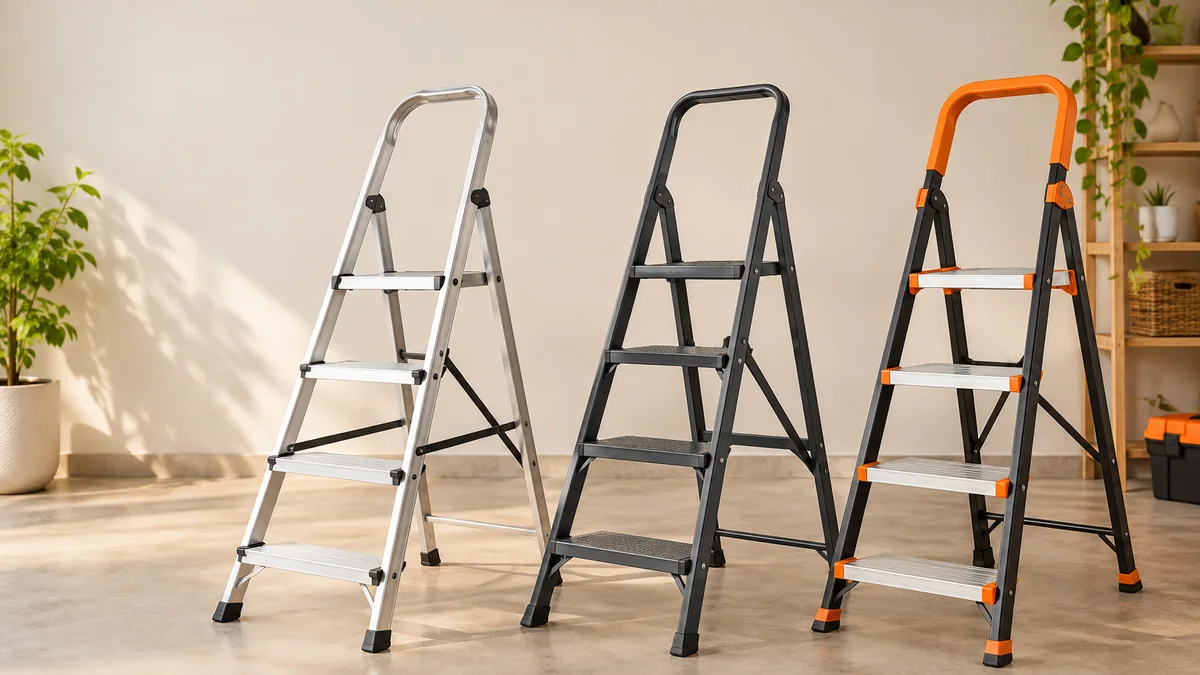
Mizu offers different ladder designs, including steel, aluminium, hybrid and railing-style options. The ideal choice depends on your requirements.
3. Why a 5-Step Ladder Can Be a Practical Choice
A 5-step ladder offers a useful middle ground for buyers who need more reach than a small three-step household ladder but do not necessarily require a tall industrial ladder.
For example, consider an apartment with high kitchen cabinets, a large wardrobe, ceiling fans and overhead storage. A suitably sized five-step model may cover several of these tasks without requiring a much larger ladder.
The number of steps, however, should never be treated as an exact measurement of working height.
When comparing a 5-step folding ladder, check:
- Overall height when fully open.
- Standing-platform height.
- Distance between steps.
- Recommended maximum standing position.
- Folded dimensions.
- Total ladder weight.
These details help you determine whether the ladder will fit your home and reach the intended working area.
A five-step designation is a starting point, not a substitute for checking the manufacturer's actual dimensions.
4. What Makes a Heavy-Duty Steel Ladder Worth Buying?
A ladder may look impressive in a photograph, but the details of its construction are what deserve attention.
Here are the important features buyers should examine.
A. A substantial metal frame
The frame is the backbone of a folding ladder. Its side rails and connecting sections support the overall structure.
Look at how the frame is shaped, how the sections connect and whether the joints appear properly finished.
A rigid-looking frame is not proof of a particular load rating. Always compare the construction with the official product specifications and rated capacity.
B. Reinforced joints and riveting
Joints are among the most important parts of a folding step ladder.
The fasteners connect different structural sections and contribute to the integrity of the assembly. Rivets should be properly fitted, with no visible looseness, cracks or deformation.
The Mizu product photographs highlight double-riveted connections at key joining points.
For a buyer, this is a useful construction detail to examine rather than relying only on general descriptions such as heavy-duty or extra-strong.
The quality of the joint assembly, the supporting material and the manufacturing process all matter.
C. Wide, grooved steps
The steps are the parts of a ladder that users interact with most directly.
Narrow or uncomfortable steps can make climbing less convenient. Look for a suitable step width and a surface designed to provide traction.
The Mizu steel ladder features visibly grooved metal steps with an anti-skid design.
The grooves provide a textured surface, but they do not make the ladder slip-proof. Always keep the steps clean and dry and use appropriate footwear.
D. A large embossed metal platform
An upper platform is an important design element in many household step ladders.
A wider platform can provide a more substantial standing surface when the manufacturer has designed and approved it for standing.
The Mizu ladder's product imagery highlights a premium embossed platform with a defined surface pattern.
When comparing ladders, examine the platform's dimensions, edges, attachment points and maximum permitted standing position.
Never assume that every upper platform or top cap is suitable for standing. Follow the actual manufacturer's instructions.
E. Handgrip and extended side handrails
Climbing requires attention to balance and body positioning.
A well-positioned handgrip can make it easier to hold the ladder while climbing and positioning yourself. Extended handrails can also provide additional places to maintain contact, depending on the design.
The Mizu steel ladder features an orange upper handgrip and extended side support components.
The ergonomic shape and placement of these parts are worth considering, particularly when comparing different five-step ladder models.
However, handrails are not a substitute for safe climbing practices or permission to stand beyond the manufacturer's recommended height.
F. Protective side guards
Small design elements can make a noticeable difference in daily usability.
The Mizu ladder features orange side guards around its frame and step assembly. The supplied product artwork identifies these as protective side guards designed to help reduce contact between the frame and a user's legs or clothing.
These components also add visual continuity to the product's orange-and-silver design.
When checking any ladder, inspect all protective components to ensure they are present, properly secured and free from damage.
G. Support structure and anti-slip feet
The support system helps the ladder retain its intended open configuration.
Inspect the connecting braces, support belt or other structural elements specified for the model. Make sure the ladder can be fully opened and its locking or support mechanisms are engaged before climbing.
The feet are equally important.
They form the contact points between the ladder and the floor. Look for firmly attached, undamaged foot caps with suitable contact surfaces.
The Mizu product artwork highlights its orange support elements and anti-slip shoes.
Even good foot caps cannot compensate for an uneven or slippery floor. The ladder must always be positioned on a firm, stable and level surface.
5. Understanding the 300 kg Load Capacity
Load capacity is one of the first specifications buyers should check when selecting a heavy-duty ladder.
The supplied Mizu product creative identifies this five-step steel ladder with a stated load-bearing capacity of up to 300 kg.
But what does this actually mean?
It refers to the maximum rated load specified for the product, not a recommended working weight.
The combined load must account for the person climbing the ladder, clothing, footwear, tools and anything else being carried.
For example, a user weighing 90 kg who carries a 10 kg tool kit is already placing a combined 100 kg load on the ladder.
The ladder must never be loaded beyond the rated capacity displayed on its official label and documentation.
Also, a high load rating does not automatically make every type of work suitable. Balance, stability, surface conditions, working height and correct use remain essential.
Before purchasing, always verify the capacity of the exact model rather than assuming that every ladder from a particular brand carries the same rating.
6. Where Can You Use a 5-Step Folding Steel Ladder?
The biggest advantage of a practical household ladder is its versatility.
At home
A five-step ladder may be useful for reaching wardrobe tops, cleaning ceiling fans, accessing kitchen storage, adjusting curtains and completing routine maintenance.
It can also be useful during festive preparations, when people need to arrange decorations or lights. For any outdoor activity, check weather, surface conditions and the manufacturer's outdoor-use instructions.
In shops and showrooms
Retail environments frequently have shelves, displays and storage units positioned above normal reach.
A suitable folding step ladder can help staff arrange merchandise, access supplies and organise stock.
In offices
Office maintenance can involve reaching ceiling fittings, storage cabinets, display units and other elevated areas.
Choose equipment appropriate for the specific task and the working environment.
In utility and storage areas
Garages, storerooms, workshops and utility rooms often have high shelves that are difficult to reach from floor level.
A folding ladder can be convenient when a task requires a temporary working position and the floor provides a stable base.
A household ladder should not be treated as industrial access equipment for every situation. Heavy construction, prolonged elevated work and difficult industrial jobs may require specialised equipment.
7. How to Choose the Right Ladder for Your Home
Before buying a steel step ladder online, use this checklist.
1. Confirm the required height. Measure the area you need to access and compare it with the ladder's actual platform height and working instructions.
2. Check the material. Decide whether a steel, aluminium or hybrid design is more appropriate for your use.
3. Examine the steps. Look for suitable width, a secure attachment and a textured surface.
4. Inspect the platform. Check its dimensions, construction and approved standing position.
5. Check the handgrip. Consider the shape and position of the support handle and handrails.
6. Verify the load capacity. Use the exact model's rated capacity, not a general brand-wide claim.
7. Examine the support system. Inspect hinges, rivets, support braces and locking components.
8. Check the feet. Ensure that the ladder has suitable contact surfaces and firmly attached foot caps.
9. Measure the folded size. Make sure it fits into your intended storage area.
10. Check the warranty. Understand what it covers, how long it lasts and which conditions apply.
A good purchasing decision should be based on all ten points rather than just a discounted price or the number of steps.
8. Ladder Safety: The Five-Minute Routine That Matters
Even a premium ladder can become unsafe if it is used incorrectly.
Before every use, take a few moments to check the following:
- Inspect the side rails, steps, joints, rivets and feet.
- Do not use the ladder if any structural part is cracked, bent or loose.
- Open the ladder completely and engage all locking or support mechanisms as instructed.
- Place it on a firm, clean, dry and level surface.
- Keep the area around the ladder clear of people, pets and obstacles.
- Face the ladder when climbing and maintain three points of contact wherever possible.
- Keep your body centred between the side rails.
- Never lean excessively to either side.
- Do not stand on the handgrip or a part not approved for standing.
- Never move or fold a ladder while someone is on it.
Be particularly careful near electrical installations. Steel and aluminium are both electrically conductive. Never use either near exposed live electrical equipment or overhead power lines. Consult a qualified electrician and select suitable non-conductive equipment for electrical work.
For more detailed safety advice, readers can consult the UK Health and Safety Executive's ladder guidance and the OSHA guide to safe stepladder use.
These references offer general guidance and do not replace the instructions supplied with the specific ladder.
9. What Makes Mizu's Approach to Ladders Different?
A ladder should not be defined by its colour, number of steps or marketing claims alone.
The details of its construction, the practicality of its design and its suitability for everyday requirements deserve equal attention.
Mizu Homeware approaches the ladder category with an understanding that customers have different needs.
Some households prefer lightweight aluminium ladders that can be moved between rooms. Others may want the substantial construction of a steel ladder. Some users may prioritise extended handrails, while others need a different step count or working height.
This is why Mizu's ladder range includes different styles rather than expecting one design to suit every application.
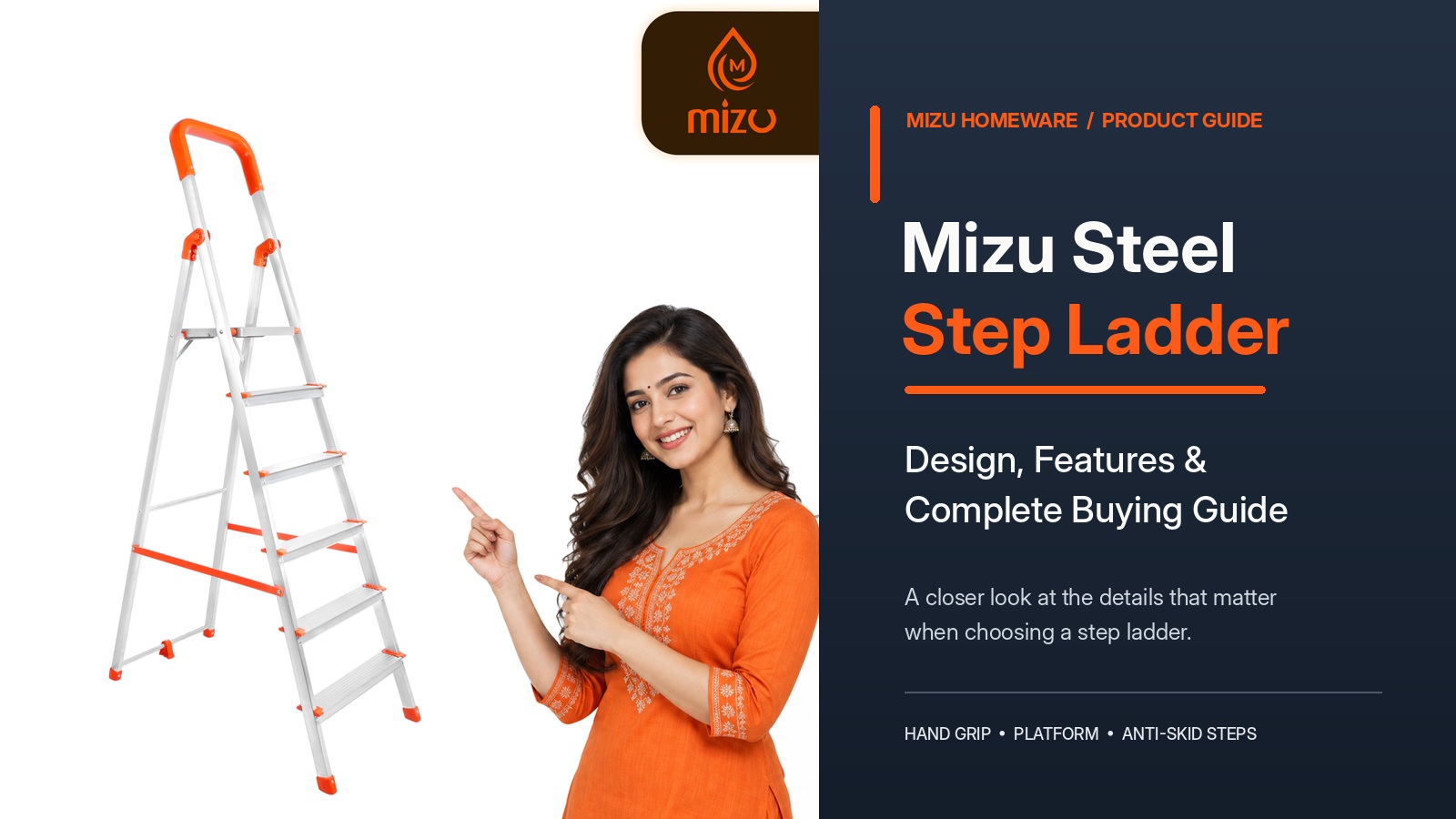
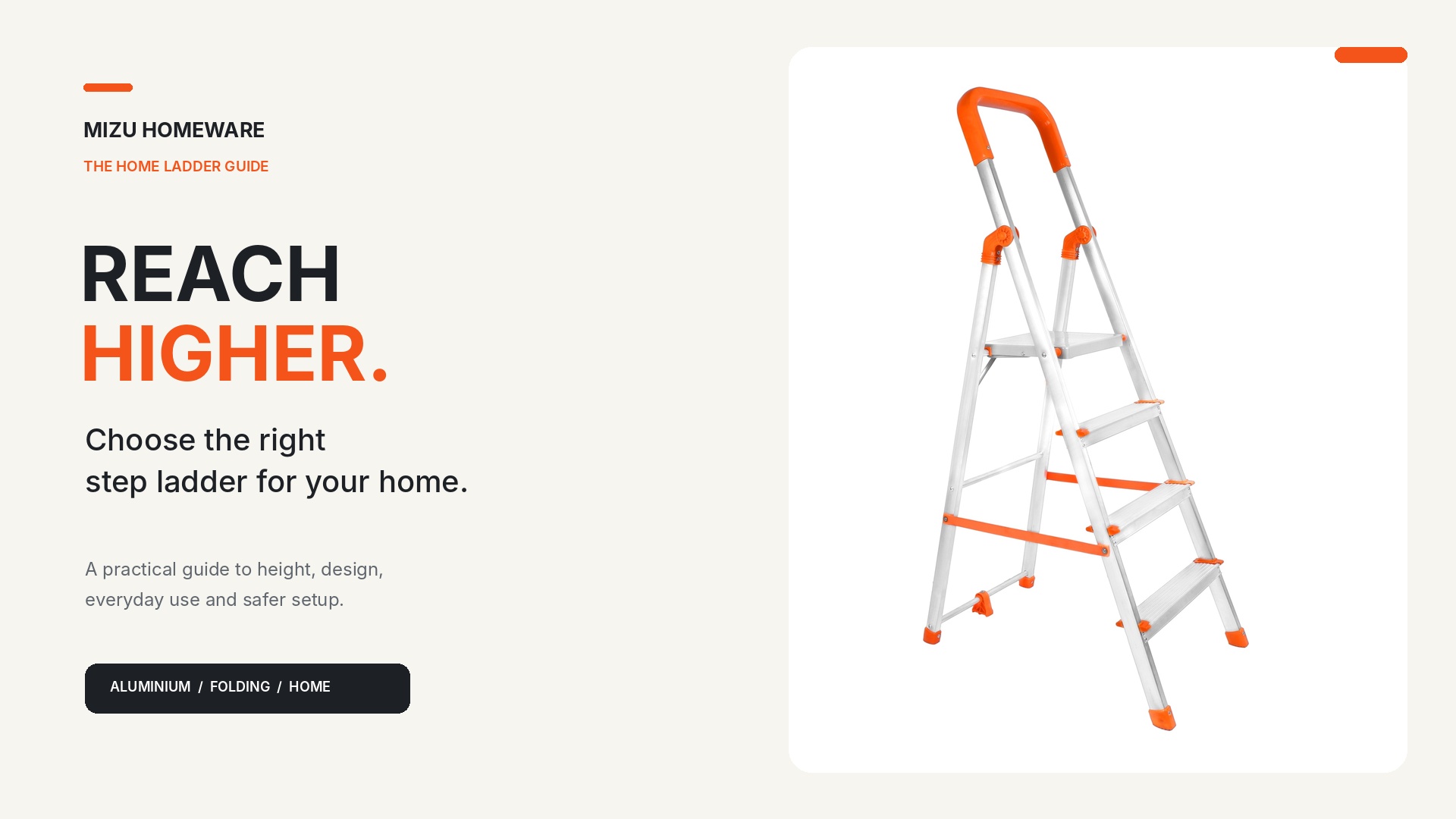
The Mizu steel ladder featured in this article brings together a distinctive orange-and-silver appearance with several practical design elements:
- A five-step configuration.
- A stated 300 kg load capacity for the pictured model.
- An upper handgrip and extended side supports.
- Grooved metal steps.
- An embossed metal platform.
- Protective side guards.
- Orange support components and anti-slip shoes.
- Reinforced, riveted connections highlighted in the product imagery.
- A folding design for convenient storage.
Each feature has a purpose, and together they help define the character of the product.
Mizu's goal is to make ladder selection easier by offering customers clearly identified models with specifications that can be compared according to actual requirements.
Because no two homes, workplaces or maintenance requirements are exactly alike, the right ladder is the one that matches the task.
10. Steel Ladder or Aluminium Ladder: Think About the Future Too
A ladder is not necessarily a one-time purchase.
It may become part of your household routine for years. Before deciding, think about where you will store it, who will use it and how regularly it will be moved.
If portability is your highest priority, an appropriate aluminium model may be a better match.
If you want the particular construction and support design offered by a steel model, compare its weight, capacity, frame and protective finish before deciding.
For frequent professional use, check that the selected ladder is suitable for the duty cycle and working environment.
And if your needs change, Mizu's other ladder categories may offer a more suitable alternative.
The objective is not to buy the biggest ladder available. It is to buy the right ladder.
Frequently Asked Questions About Steel Ladders
1. Which steel ladder is best for home use?
The best steel ladder for home use is one that offers the correct working height, an appropriate load rating, properly designed steps, suitable hand support and a stable support structure. A folding five-step ladder can be practical for many household tasks, depending on the height required.
2. Is a five-step ladder suitable for household use?
A five-step ladder can be suitable for accessing certain overhead storage areas, wardrobes and other elevated household spaces. Always compare its actual platform height and permitted working position with the height of your intended task.
3. What is the advantage of a ladder with a handrail?
A handrail provides a designated gripping surface while climbing and positioning yourself. Its actual usefulness depends on its shape, height, placement and the ladder's instructions.
4. What does 300 kg load capacity mean in a ladder?
It is the maximum rated load specified for that particular ladder. The total load includes the user and anything carried. It is not a recommendation to load the ladder to its maximum during routine use.
5. Is a steel ladder better than an aluminium ladder?
Neither is universally better. Steel designs can offer a substantial frame construction, while aluminium designs are often easier to carry. Compare the exact models, their weight, rated capacity, construction and intended applications.
6. What should I check before buying a folding ladder online?
Check the material, number of steps, height, load rating, platform, handgrip, steps, support structure, foot caps, folded dimensions, warranty and seller information.
7. How should a folding ladder be stored?
Clean and dry the ladder, fold it according to its instructions and store it in a secure location where it cannot fall or obstruct a walkway. Keep children away from stored ladders.
8. Can I use a steel ladder for outdoor work?
Only when the specific model is suitable for the conditions and the ground is firm and level. Check its protective finish and manufacturer instructions. Avoid using it in strong winds, rain, near electrical hazards or on unstable surfaces.
Final Thoughts: Choose More Than Just a Ladder
The next time you need to reach a high shelf, arrange a curtain or organise overhead storage, the ladder you choose will make a difference to how conveniently you can complete the task.
Look beyond the number of steps. Examine the frame, connections, platform, handgrip, support components, feet and rated load capacity. Understand the difference between steel and aluminium and select a model that genuinely suits your environment.
At Mizu Homeware, we believe thoughtful design begins with understanding everyday needs.
Because a good ladder isn't just about reaching higher.
It's about reaching higher with the right equipment, the right support and the right approach to safety.
Explore the Mizu Ladder range and find a design that fits your home and your work.