Start with the job, not just the material
When comparing ladders, it is easy to focus on colour or a material name. A better decision starts with the job: how often the ladder will be moved, where it will be stored, the working load, the surface it will stand on and the manufacturer’s intended use.
Aluminium, steel and hybrid ladders can all be useful when designed for the right purpose. The name of the material does not, by itself, tell you a ladder’s quality, safe working load or suitability for a particular task.
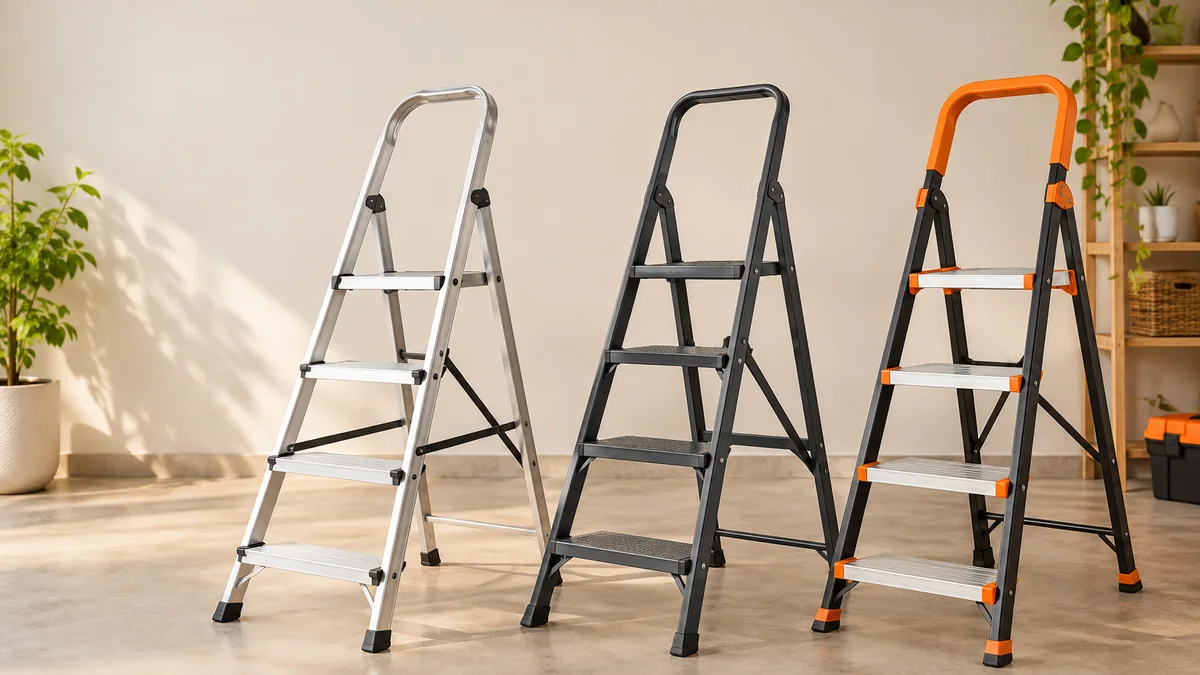
Aluminium ladders: a practical choice when portability matters
Aluminium ladders are often selected because they are relatively light to move and aluminium naturally forms a protective oxide layer that helps resist corrosion. That can make them convenient for routine household jobs where the ladder is carried between rooms or stored after use. Still, aluminium ladders are metal ladders. Do not use them near live electrical equipment or overhead power lines where contact is possible. Check the product’s actual weight, step dimensions, joints, braces and rated working load rather than assuming every aluminium model has the same performance.
Steel ladders: check construction, finish and weight
Steel construction may appeal to buyers looking for a solid-feeling ladder. Many steel models are heavier than comparable aluminium designs, which can make frequent carrying less convenient. A painted or coated surface also needs care: damage to the finish can allow corrosion to develop over time.
Compare the full product specification rather than choosing steel based on the idea that heavier automatically means safer or stronger. The frame, joints, fasteners, steps, base and quality control all matter, as does using the ladder within its stated rating.
Hybrid ladders: understand what “hybrid” means for that model
A hybrid ladder uses more than one material or construction type, but the exact combination varies by product. Look at the side rails, steps, platform, braces and fittings so you know what is made from what. Two products labelled “hybrid” may not have identical designs or properties.
Do not assume that a hybrid ladder is electrically non-conductive. If electrical contact is a possible hazard, do not use a metal ladder; select suitable access equipment specifically rated for the task and follow the relevant safety procedure.
Compare these six things before buying
- Intended use: Household, commercial or another clearly stated application.
- Rated working load: Include the user, clothing, tools and materials.
- Actual dimensions: Platform height, open footprint and folded size.
- Footing and steps: Look for secure feet and steps designed to reduce slipping.
- Locks and joints: Check that braces engage correctly and the ladder opens as intended.
- Care and warranty: Read maintenance advice and the written warranty terms.
Which type is best for you?
Choose aluminium when portability is a key consideration and the model fits your job. Consider steel when its specific design, finish and weight suit the work and storage location. Consider a hybrid design when you understand its material combination and its features match your needs.
Whichever material you choose, do not use a damaged ladder, do not exceed its rated load, and set it up fully open on a stable, level surface. Follow the label and the manufacturer’s instructions every time.
Explore Mizu Ladders: Compare available aluminium, hybrid and railing models by specifications—not just by appearance.